

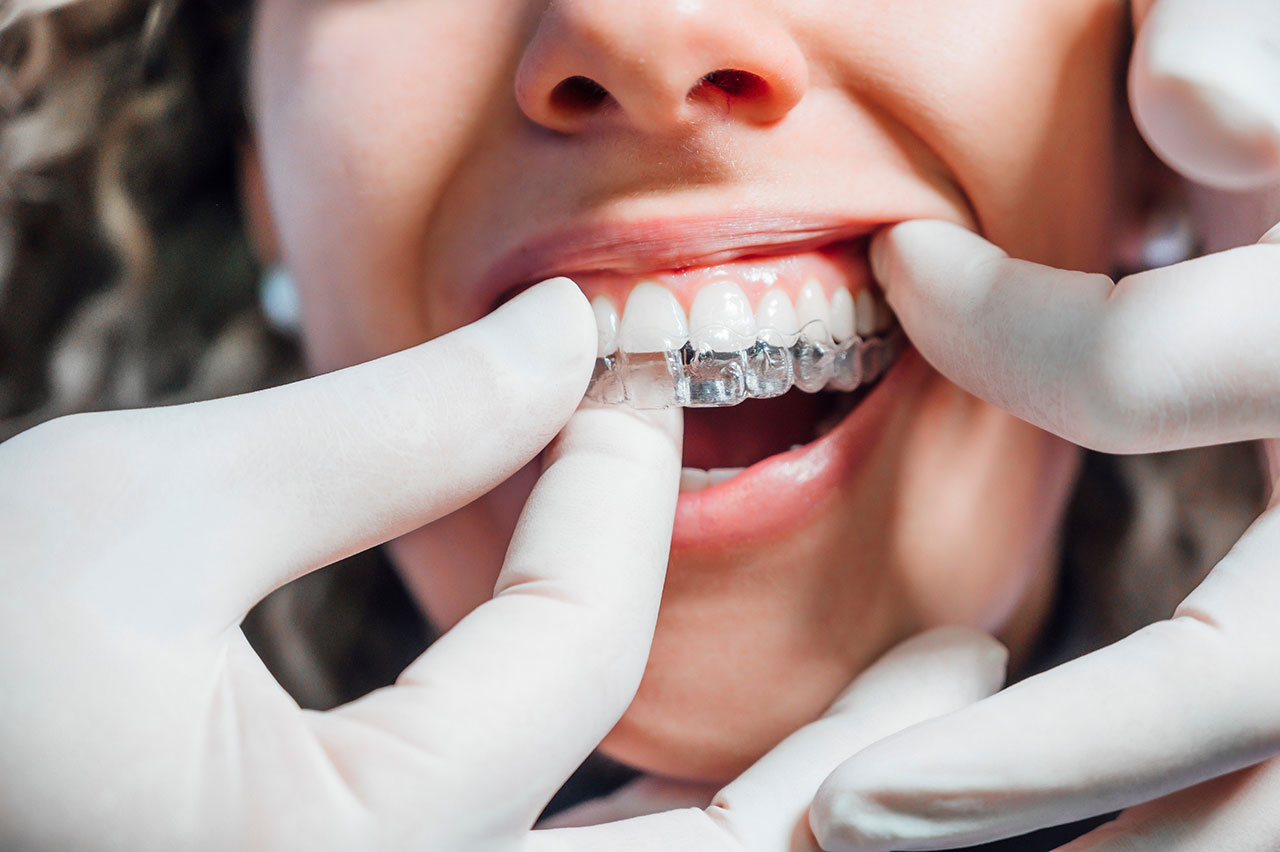
Can teeth really be straightened without metal brackets and wires? For many teenagers and adults, clear aligner treatment can gradually move teeth using a planned sequence of removable trays. Patients exploring invisible braces in Sandy Springs often appreciate that the aligners are discreet, removable, and designed around an individualized digital treatment plan.
However, invisible braces are not simply cosmetic trays. They are orthodontic appliances that apply controlled pressure to move teeth. Successful treatment requires an accurate diagnosis, consistent wear, healthy teeth and gums, and professional monitoring. In addition, not every type of crowding or bite concern can be treated predictably with clear aligners alone.
Connected Smile Solutions evaluates alignment within the context of the entire mouth. Therefore, the discussion includes more than how straight the front teeth look. Bite function, gum health, tooth shape, previous dental work, jaw relationships, and long-term stability all influence the plan.
What Are Invisible Braces?
Invisible braces, commonly known as clear aligners, are transparent removable appliances that fit over the teeth. Each set is designed to guide selected teeth through a small portion of the planned movement. After wearing one set for the prescribed period, the patient changes to the next set in the sequence.
The aligners are created from digital records of the teeth. Computer-based planning allows the dentist to map movements and preview the proposed arrangement. However, a digital simulation is a planning tool, not a guarantee that every tooth will move exactly as shown. Biology, wear habits, bite forces, and individual response influence progress.
Small tooth-colored attachments may be bonded to selected teeth. These shapes give the aligners additional grip for movements that would otherwise be difficult. Although attachments can be visible at close range, they remain much less noticeable than traditional metal brackets for many patients.
What Problems Can Clear Aligners Treat?
Mild to Moderate Crowding
Crowding occurs when there is not enough room for the teeth to align normally. Teeth may overlap, rotate, or sit forward or behind neighboring teeth. Clear aligners can often create and distribute space through carefully planned movement.
Depending on the case, space may be created by expanding the arch slightly, moving teeth backward, reshaping tiny amounts between selected teeth, or coordinating several movements. However, severe crowding may require a different orthodontic strategy or specialist involvement.
Spaces Between Teeth
Gaps may result from tooth size, missing teeth, oral habits, gum conditions, or the position of the tongue and lips. Invisible braces can close many spaces by guiding teeth toward one another. Nevertheless, the underlying cause should be identified first.
For example, a space caused by an unusually small tooth may reopen unless tooth shape is also addressed. In that situation, clear aligners might be combined with tooth-colored bonding after orthodontic treatment.
Selected Overbite and Overjet Concerns
Overbite describes how much the upper front teeth vertically overlap the lower teeth. Overjet refers to how far the upper teeth project forward. Clear aligners can improve selected cases, especially when tooth position is the main cause.
However, larger jaw-related differences may require more complex orthodontic care. Age, growth, skeletal structure, and treatment goals all affect what is possible.
Selected Crossbite Concerns
A crossbite occurs when an upper tooth bites inside a lower tooth rather than outside it. Clear aligners may correct certain dental crossbites by moving individual teeth or coordinating arch width. Yet broader jaw-related crossbites may need other treatment methods.
Minor Relapse After Previous Orthodontic Treatment
Teeth can shift after braces or aligner treatment, particularly when retainers are not worn as directed. Invisible braces may correct minor relapse if the teeth and gums are healthy. Afterward, a new retention plan is essential to protect the result.
Who May Be a Good Candidate for Invisible Braces?
Good candidates generally have healthy teeth and gums, realistic expectations, and a willingness to wear the aligners consistently. Active cavities and gum disease should be treated before tooth movement begins. Otherwise, orthodontic appliances can make existing problems harder to manage.
Because aligners are removable, personal responsibility matters. The trays work only while they are in the mouth. Patients who frequently forget or remove them for long periods may experience delayed movement or an incomplete result.
Invisible braces may also require adjustments around crowns, bridges, implants, or other restorations. Dental implants do not move like natural teeth, so their position must be incorporated into the plan. Meanwhile, teeth with crowns can often move, but attachment placement and bonding may require special consideration.
Teenagers may be candidates when they are mature enough to manage wear, cleaning, and tray changes. Adults of many ages may also qualify as long as oral health and bone support are suitable.
Benefits of Invisible Braces
- Discreet appearance: Clear aligners are less noticeable than conventional metal brackets and wires.
- Removable design: Patients can take aligners out for meals, brushing, and interdental cleaning.
- Fewer food restrictions: Because trays are removed before eating, patients can usually continue enjoying a broad range of foods.
- Digital planning: Treatment begins with detailed records and a planned sequence of tooth movement.
- Smoother surfaces: Aligners do not include protruding metal brackets, although attachments may still be used.
- Flexible for active lifestyles: Clear trays may be practical for work, school, photographs, and social activities.
- Improved access for home care: Removing the trays makes it easier to brush and clean between the teeth than with fixed brackets.
What Happens During Clear Aligner Treatment?
The first appointment includes an examination of the teeth, gums, bite, and jaw movement. Photographs, digital scans, and dental X-rays may be used to evaluate alignment and root health. The dentist also reviews previous dental treatment and discusses what you hope to change.
If invisible braces are appropriate, digital planning is used to map the proposed movements. The plan includes the sequence of aligners, possible attachments, space-management techniques, and estimated treatment phases.
Once the aligners are ready, the first trays are checked for fit. Tooth-colored attachments may be placed, and patients receive instructions for wear, removal, cleaning, and storage. The exact schedule for changing trays varies according to the treatment plan.
Follow-up visits allow the dentist to confirm that the teeth are tracking properly. If a tooth is not following the planned movement, the aligners may need adjustment or replacement. In some cases, a refinement phase with additional trays is needed.
After active movement is complete, retainers help maintain the new positions. Retention is not optional if long-term stability is the goal. Teeth remain capable of shifting throughout life, even after excellent orthodontic treatment.
How Many Hours a Day Should Aligners Be Worn?
Clear aligners generally need to be worn most of the day and night, with removal limited to eating, drinking anything other than plain water, brushing, and cleaning between the teeth. Your dentist will provide a specific wear schedule.
Leaving trays out for long meals, frequent coffee breaks, or social events can add up quickly. As a result, teeth may not reach the positions built into the next aligner. A tray that feels unusually tight or will not seat fully may indicate that wear has been inconsistent or movement is not tracking as expected.
Do not move ahead to a new set simply because the calendar says it is time. If the current aligner is not fitting properly, contact the dental office for instructions.
Eating and Drinking With Invisible Braces
Remove aligners before eating. Chewing with the trays can crack, distort, or stain them. In addition, food trapped beneath an aligner can remain against the teeth and increase cavity risk.
Plain water is generally the safest beverage while aligners are in place. Remove them for coffee, tea, soda, sports drinks, juice, and other beverages. Hot liquids can also affect some aligner materials.
After meals, brush before replacing the trays when possible. If brushing is temporarily unavailable, rinse the mouth and aligners thoroughly, then complete normal cleaning as soon as practical.
How to Clean Clear Aligners
Rinse aligners with cool or lukewarm water whenever they are removed. Clean them using the method recommended by the dental team. Avoid very hot water because heat may change the fit.
Do not rely on cleaning the trays while ignoring the teeth. Brush twice daily with fluoride toothpaste and clean between the teeth every day. Aligners cover the teeth closely, so plaque, sugar, and acid left underneath can remain in contact with enamel.
Store trays in their case rather than wrapping them in a napkin. Many aligners are accidentally thrown away at restaurants or damaged by pets. If a tray is lost, contact the office rather than guessing whether to return to an older set or advance to the next one.
Will Invisible Braces Affect Speech?
Some patients notice a temporary lisp or difference in speech when they begin wearing aligners. The tongue is adjusting to a new surface, so this usually improves with practice. Reading aloud and speaking normally can help the adjustment process.
If an aligner edge feels sharp or continues to affect speech significantly, ask the dental team to evaluate it. Do not make major changes to the tray at home because altering its shape may affect tooth movement.
Are Clear Aligners Painful?
Clear aligners apply pressure, so tightness or tenderness is common when a new set is inserted. The sensation often improves as the teeth adapt. However, treatment should not produce severe or worsening pain.
A rough edge, poorly fitting tray, inflamed gum area, or tooth that feels unusually painful should be checked. In addition, report swelling, significant mobility, or a change that concerns you.
Invisible Braces Compared With Traditional Braces
Traditional braces remain highly effective and may offer greater control for certain complex movements. Because they are fixed to the teeth, they also do not depend on remembering to wear removable trays.
Invisible braces offer discretion, removability, and easier access for home care. However, they require excellent cooperation. Attachments, elastics, and refinement trays may still be necessary, so treatment is not always as simple as wearing completely clear trays without additional components.
The most appropriate system depends on the bite, movement complexity, age, lifestyle, and treatment goals. A referral to an orthodontist may be recommended when specialized or highly complex care is needed.
Questions Patients Ask About Invisible Braces
Can clear aligners fix every crooked tooth?
No. Clear aligners can treat many alignment problems, but severe crowding, large jaw differences, impacted teeth, and complex bite concerns may require another approach.
Can I remove aligners for a special event?
Brief removal may be reasonable, but total daily wear still matters. Frequent or extended removal can slow treatment and affect how the next tray fits.
Will I need attachments?
Many patients need small tooth-colored attachments to improve aligner grip. The number, shape, and location depend on the movements being planned.
What happens if I lose an aligner?
Contact the office for instructions. The appropriate response depends on how long the tray was worn and how the next or previous aligner fits.
Do I need retainers after treatment?
Yes. Retainers help hold teeth in their corrected positions. Without retention, some degree of shifting is likely over time.
Explore a Straighter Smile in Sandy Springs
Invisible braces can improve selected crowding, spacing, and bite concerns through a customized sequence of removable aligners. However, predictable results depend on proper diagnosis, consistent wear, professional monitoring, and long-term retention. Connected Smile Solutions provides personalized clear aligner and cosmetic dentistry options for Sandy Springs and nearby communities.
To learn whether invisible braces are appropriate for your smile, contact Connected Smile Solutions at (404) 255-7700 to Schedule a Consultation.